Ballistic Comparison of Handgun Calibers: .45 ACP, .40 S&W, and 9mm Luger
A YouTube video showcased a ballistic test comparing three popular handgun calibers: .45 ACP, .40 S&W, and 9mm Luger, using full metal jacket (FMJ) ammunition. The results showed that the 9mm and .40 S&W rounds penetrated the test medium, while the .45 ACP round stopped within it. The video’s creator concluded that the .45 ACP was underwhelming—a conclusion that does not hold up under closer technical scrutiny.
1. Historical and Technical Context
Firearm and ammunition development has always been driven by the needs of defense and operational realities. Early calibers were typically large in diameter and relatively slow-moving. While these projectiles had limited effective range, they excelled in stopping power due to their substantial mass and cross-sectional area.
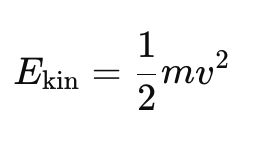
With advancements in firearms technology, the trend shifted toward smaller, faster calibers. These offered greater range and magazine capacity, while maintaining similar muzzle energy levels. Kinetic energy continues to be calculated using the classic formula:
| Caliber | Brand | Bullet weight [g] | Bullets peed (v0)[m/s] | Energy[Joule] |
| 9mm Luger | GECO FMJ | 8,0 | 360 | 518 |
| .40 S&W | GECO FMJ | 11,7 | 310 | 562 |
| .45 ACP | GECO FMJ | 14,9 | 260 | 503 |
2. Muzzle Energy Comparison
| Caliber | Muzzle Energy (Joules) |
|---|---|
| .45 ACP | 332 – 735 J |
| .40 S&W | approx. 680 J |
| 9mm Luger | 380 – 700 J |
Table 1: Typical muzzle energy values for the three calibers.
While the energy levels are comparable across calibers, the differences in projectile mass, velocity, and especially bullet diameter significantly influence terminal performance.
3. Terminal Performance and Energy Transfer
In the test, both the 9mm and .40 S&W rounds completely penetrated the test medium, while the .45 ACP round was stopped within the target. This suggests that the .45 ACP successfully transferred all of its kinetic energy to the target—a highly desirable effect for defensive applications.
By contrast, the rounds that passed through may have transferred only part of their energy, with the remainder exiting the target and posing a potential risk (i.e., overpenetration).
Labeling the .45 ACP as "underperforming" due to limited penetration overlooks the fact that full energy transfer often equates to superior stopping power.
4. Advances in Projectile Technology
It is important to note that the test was conducted using FMJ ammunition—projectiles that are not designed to deform and are suboptimal for energy transfer.
Modern bullet designs, such as:
-
Hollow point bullets (HP),
-
Soft-point or jacketed soft point bullets,
-
Controlled expansion projectiles,
have greatly improved terminal effectiveness. These bullets are engineered to expand within the target, maximizing energy transfer and stopping power—even in calibers known for higher penetration.
5. Final Assessment
Contrary to the video’s conclusion, the test results do not show the .45 ACP in a negative light:
-
The .45 ACP demonstrably transferred its full energy into the target.
-
Its larger diameter and mass contribute to reliable stopping power.
-
The penetration of the 9mm and .40 S&W rounds may indicate incomplete energy transfer.
Conclusion:
Despite similar muzzle energy levels, the .45 ACP stands out for its superior energy transfer to the target—a critical factor for its intended role as a defensive cartridge. While modern projectile designs have improved the effectiveness of smaller calibers, under identical test conditions the .45 ACP remains highly effective in terms of terminal performance.
 Deutsch (Österreich)
  English (United Kingdom)